
The Brief Was Identical for Both
The call came from the Chief HR of a large multinational.
Two senior leaders. One based in the United States. One based in India. Both high performers. Both being considered for promotion to the next level. Both needing what the Chief HR described as "slight refinement in their approach to people."
The coaching brief was the same for both. The methodology was the same. The coach was the same.
Everything was identical — except the two human beings sitting across from me.
And that difference changed everything.
What Is Stakeholder Coaching — And Why It Works
Before I share what happened, it is important to understand the methodology at the heart of this engagement.
The Marshall Goldsmith Stakeholder-Centered Coaching process is widely regarded as one of the most effective executive coaching methodologies in the world. It is built on a deceptively simple but profoundly powerful premise:
Leadership effectiveness is not defined by what you think of yourself. It is defined by what the people around you experience.
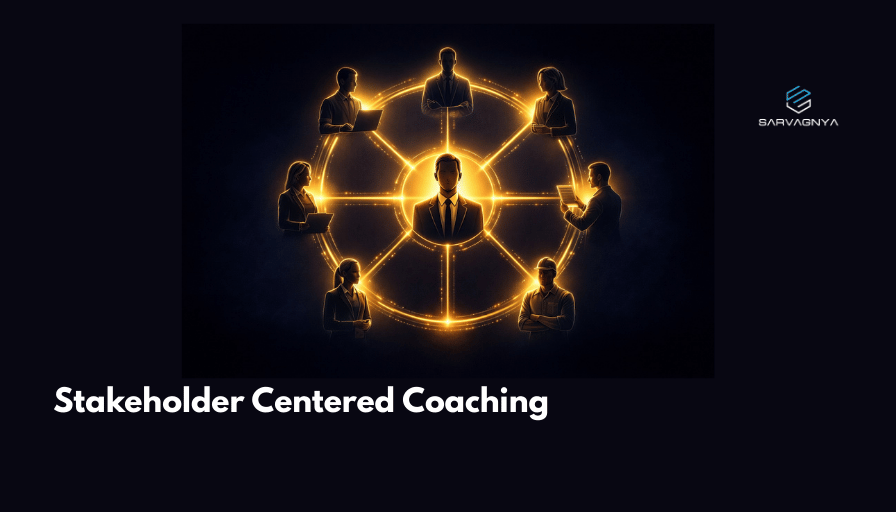
The process works like this. The leader identifies key stakeholders — colleagues, direct reports, peers, and superiors — who interact with them regularly and can provide honest, unbiased feedback. Those stakeholders are interviewed confidentially by the coach. The feedback is then anonymised, synthesised, and shared with the leader in what is called an "attuned feedback" conversation — carefully framed not as criticism but as a development opportunity.
The leader then sets specific, measurable behavioural goals — not based on what they think they need to improve, but based on what the people they lead actually experience.
And here is what makes this process uniquely powerful: the stakeholders are not left behind after the initial feedback. The leader goes back to them regularly — checking in, listening again, taking new action, and demonstrating change over time. The stakeholders become active participants in the leader's growth journey.
This is not coaching in a vacuum. This is coaching in full view of the people it is meant to benefit.
When it works — and it works powerfully — it transforms not just the leader but the entire ecosystem around them.
When it doesn't work — the reasons are almost always the same. And this story illustrates both sides with painful clarity.

Leader 1 — The Performance
From the very first conversation, Leader 1 was impressive.
He engaged enthusiastically with the Marshall Goldsmith process. He asked intelligent questions. He spoke eloquently about his belief in stakeholder satisfaction and his genuine desire to grow as a leader. He selected six stakeholders himself — people he described as capable of giving him unbiased, honest feedback.
He confirmed his commitment to his reporting manager and HR business partner. He said all the right things to all the right people.
I remember thinking — this is going to be a rewarding coaching engagement. I was wrong.
When the stakeholder interviews were complete and I shared the anonymised, attuned feedback with him — the carefully synthesised picture of how his leadership was experienced by the people around him — something shifted.
He did not sit with the feedback. He did not ask clarifying questions. He did not reflect.
He went directly to his superior and complained that his stakeholders were targeting him.
Shortly after, I received a warm, well-written email from him. He said he had thoroughly enjoyed the coaching process. He said the experience had been valuable and meaningful. He said he was unable to continue — for personal reasons.
It was a masterclass in managed communication.
The reality was different. The coaching had been made a condition of his promotion. He had known this from the beginning. Everything — the enthusiasm, the stakeholder selection, the eloquent statements about feedback and growth — had been a performance designed to secure the promotion he had already decided he deserved.
Under pressure from the organisation, the coaching resumed. He completed it.
And then he resigned — citing, with remarkable audacity, that the company had never taken any initiative to develop him.

Leader 2 — The Decision
Leader 2 was less immediately impressive in the conventional sense.
He was direct. He told me clearly that he wanted to limit stakeholder feedback to just two people — his boss and one direct report who represented him during his absence. He was clear about what he personally wanted from the coaching. No grand statements. No eloquent declarations about feedback and growth.
Just clarity about where he stood and what he wanted.
I respected that honesty.
When the feedback came — concise, focused, from just two stakeholders — he listened. Really listened. He did not defend himself. He did not reframe the feedback to make it more comfortable. He took notes. He sat with what he heard.
Then he set practical, specific goals.
The coaching progressed steadily. And then — midway through the engagement — he said something I did not expect.
"I think I should actually speak to more stakeholders."
Nobody had asked him to. The original agreement was two stakeholders. He had chosen that boundary himself. But somewhere in the process of genuinely engaging with feedback, he had arrived at a realisation that most leaders never reach:
The more people you listen to, the better you lead.
We spent three full sessions on the art and discipline of seeking feedback — how to approach stakeholders, how to listen without the impulse to respond or defend, how to take notes without filtering, how to commit to specific actions and then return to close the loop.
He built it into his leadership practice. Not as a coaching exercise — as a genuine habit.
He was promoted.
Then promoted again.
Not because he said the right things in the right rooms.
Because the people around him experienced something real changing in how he led them.
The Five Lessons This Engagement Taught Me
After more than thirty years of coaching leaders across industries and geographies, this engagement crystallised several truths that I believe every coach, every CHRO, and every leader considering coaching must understand.
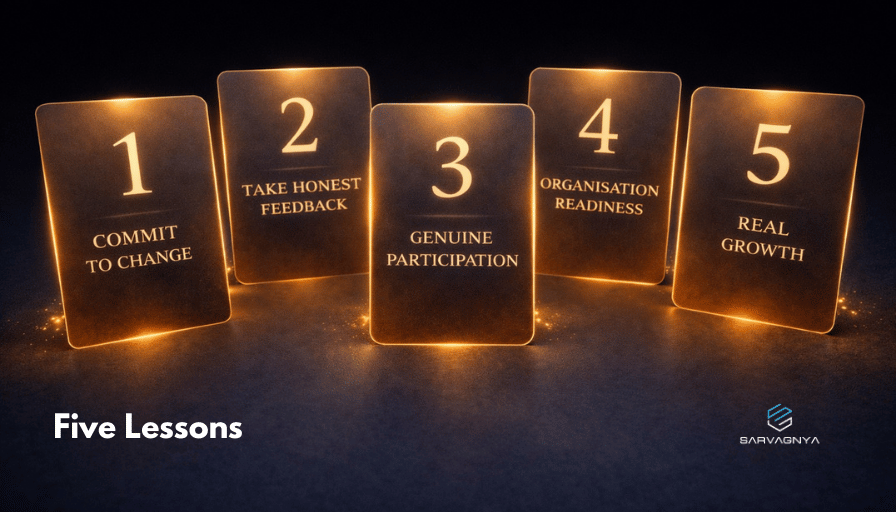
Lesson 1: Enthusiasm Is Not Commitment
Leader 1 was enthusiastic. Leader 2 was clear. Enthusiasm in a coaching context can be a performance — and a highly convincing one. The real signal of genuine commitment is not what someone says about coaching before it begins. It is what they do when the feedback arrives and it is uncomfortable.
Watch for the moment of discomfort. That is where you discover whether someone is truly coachable.
Lesson 2: Stakeholder Coaching Requires Radical Honesty — From the Leader
The Marshall Goldsmith process is built on the leader's willingness to be seen — genuinely, accurately, without manipulation. When a leader controls the narrative, manages the stakeholders, or filters the feedback before it reaches the coach — the process is compromised from the inside.
A coachee who manipulates the stakeholder coaching process does not just waste the coach's time. They waste the organisation's investment, damage the trust of the stakeholders involved, and ultimately deprive themselves of the one thing that could have genuinely helped them.
Lesson 3: You Cannot Coach Someone Who Has Decided Not To Change
This is the hardest truth in coaching — and the one most organisations resist hearing.
Coaching is not a treatment that is administered to a passive recipient. It is a collaborative process that requires the active, genuine participation of the person being coached. When that participation is absent — when the leader has already decided that they are fine as they are, that the feedback is wrong, that the stakeholders are the problem — no methodology, however powerful, can bridge that gap.
The coach cannot want the leader's growth more than the leader wants it themselves.
Lesson 4: Organisations Must Ask Harder Questions Before Commissioning Coaching
The Chief HR in this engagement commissioned coaching for both leaders with the same brief and the same expectation. But the two leaders were fundamentally different in their readiness to be coached — and that difference was knowable before the coaching began, had the right questions been asked.
Before commissioning executive coaching, organisations must ask:
🔹 Does this leader genuinely believe they have something to develop — or do they believe they are already where they need to be?
🔹 Is this coaching being commissioned because the leader wants to grow — or because the organisation hopes coaching will solve a problem it is unwilling to address directly?
🔹 Has the leader been involved in defining the coaching goals — or have those goals been imposed from above?
🔹 What happens if the leader does not engage genuinely with the process?
Coaching commissioned under organisational pressure — without genuine buy-in from the leader — is not coaching. It is an expensive performance that serves nobody.
Lesson 5: Real Growth Is Quiet, Consistent, and Cumulative
Leader 2 never announced his growth. He did not send eloquent emails about the value of feedback. He did not perform development for the benefit of his superiors.
He simply, consistently, quietly changed how he showed up for the people around him.
And those people noticed. And told others. And the organisation noticed too.
This is how genuine leadership development works. Not in dramatic declarations. In small, consistent, compounding acts of genuine listening and intentional change.

A Message for Each Audience Reading This
For CHROs and HR Leaders: Coaching is one of the most powerful leadership development investments an organisation can make. But its power is entirely dependent on the readiness of the person being coached. Before you commission coaching — especially under pressure from a senior leader's boss — ask the hard questions. Protect the integrity of the process. And build the organisational culture where feedback is genuinely valued, not politically managed.
For Executive Coaches: You will encounter Leader 1 more often than you expect. Recognise the performance early. Establish clear contracting about what genuine participation looks like. And remember — when someone is determined not to change, the most professional thing you can do is name it clearly and redirect the engagement accordingly. Your integrity as a coach is your most valuable asset.
For Senior Leaders Being Coached: The feedback you receive in coaching is a gift — often the most honest gift your organisation will ever give you. The stakeholders who share it are taking a risk on your behalf. Honour that risk. Sit with the discomfort. Do not manage the narrative. The leaders who transform through coaching are not the most talented or the most experienced — they are the most honest with themselves.
For CEOs and Business Leaders: The culture of feedback in your organisation starts with you. If your senior leaders see feedback as a political risk rather than a development opportunity — that is a culture problem, not a coaching problem. Coaching cannot fix a culture that punishes honesty. But it can accelerate the growth of leaders in a culture that genuinely values it.

A Final Reflection
Two leaders. The same brief. The same coach. The same methodology.
One used the process to serve himself. One used the process to serve the people around him.
One left the organisation citing a failure of development that was entirely his own creation. One was promoted twice and became one of the most respected leaders in his division.
Stakeholder coaching works — profoundly, measurably, and consistently — when the person being coached has made a genuine decision to grow.
When that decision is absent, no methodology can substitute for it.
The most important question in any coaching engagement is not "What does this leader need to develop?".
It is "Has this leader genuinely decided to develop?". Everything else flows from the answer to that question.